
English| EUR
Suggested for you
More currencies
Choose a language
Two national parks share one sandstone massif across the German–Czech border, and the air behaves differently in a shaded ravine than it does on an exposed plateau 300 metres above it. This bohemian and saxon switzerland national park weather guide explains the patterns that matter to hikers: fog in the Elbe valley, sudden temperature drops in the gorges, and the months when sandstone stays slick for days. Read it before you pack.
Quick answer
Expect a temperate continental climate: summer highs typically in the low-to-mid twenties Celsius, winters hovering near freezing, and rainfall spread through the year with a summer peak. The park itself is open 00:00–23:59 daily with free entry, so conditions, not gates, set your limits. The real variable is microclimate — valley floors run cold and damp long after ridgelines dry out.
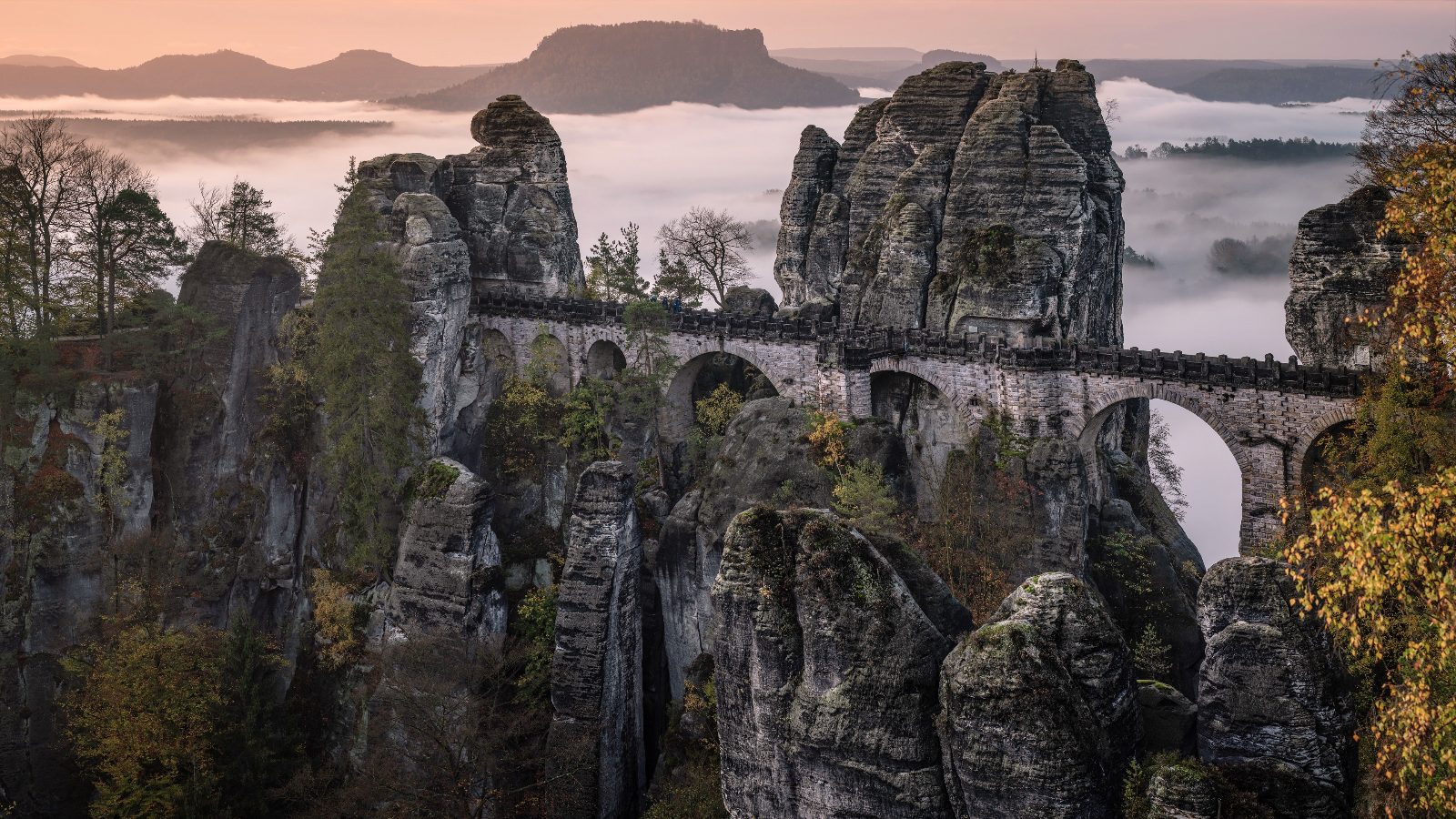
The Elbe Sandstone Mountains do something unusual with air. Cold air sinks into the narrow ravines of the Kirnitzsch valley and the Schwedenlöcher and stays there, producing temperature inversions where the gorge floor is several degrees colder than the plateau above it — a phenomenon local foresters call the cold-air lake. Ferns and mosses that belong hundreds of kilometres north survive here because of it. Anyone researching bohemian and saxon switzerland national park weather is really researching this vertical layering rather than a single regional forecast. What this means in practice is that a single number on a weather app rarely describes the day accurately. A forecast issued for Bad Schandau, on the river at roughly 120 metres, will understate the wind and overstate the warmth on the Schrammsteine ridge. River fog is the clearest example: on still mornings from late September through November, the Elbe valley fills with mist while the Bastei bridge and the Lilienstein table mountain stand clear above it. Photographers plan whole trips around this. Hikers who set out expecting sunshine at river level often find the opposite. Sandstone adds its own rule. The rock is porous, and after sustained rain it holds moisture for a day or more, which makes the iron ladders and stemples of the Häntzschelstiege and similar via ferrata routes genuinely slippery. Climbing on wet sandstone also damages it, and the Saxon climbing tradition treats a dry-rock rule as etiquette. The saxon switzerland weather forecast worth checking is therefore yesterday's as well as today's. In Bohemian Switzerland, the same logic applies at the Pravčická brána gate and along the Kamnitz gorge boat runs, which suspend service when water levels or ice make passage unsafe. The practical takeaway is layering and flexibility. Carry a shell, expect wind on exposed sandstone terraces, and treat any thunderstorm warning as a reason to stay off ladders and open plateaus. Keep a valley alternative in reserve — the Kirnitzschtal tram line and the Elbe towpath remain walkable in weather that closes the high routes. Understanding bohemian and saxon switzerland national park weather is less about predicting a perfect day than about knowing which of the park's two altitudes will be kinder when the forecast turns.
“Cold air sinks into the ravines and stays there, so a forecast for the river rarely describes the ridge.”
The period from late spring to early autumn offers the most stable conditions for exploring the sandstone formations, though late spring and early autumn balance moderate temperatures with lower precipitation. Planning your visit within the 06:00–09:00 arrival window is essential to avoid both midday weather spikes and peak visitor congestion.
10°C to 18°C; occasional rain
Mild temperatures and blooming flora make trails comfortable. Early morning visits minimize exposure to unpredictable afternoon showers.
18°C to 28°C; humid
Warmest months require early starts to avoid peak midday heat. Frequent afternoon thunderstorms occur during this time.
8°C to 16°C; often clear
Cooler air and stable, clear skies offer better visibility for photography. Foliage transitions create distinct conditions on forest trails.
—
Arriving during the 06:00–09:00 window provides cooler air and thinner crowds. This strategy is effective year-round for avoiding heat and congestion.
Verdict: For the best experience, visit on a weekday morning between 06:00 and 09:00 during the months of April or October.
The Bohemian and Saxon Switzerland National Park remains accessible to visitors throughout the week, including weekends and public holidays. As an open-access natural area, the park maintains 24-hour availability to accommodate varying weather conditions and hiking schedules.
Access to Bohemian and Saxon Switzerland National Park is maintained as a public resource regardless of weather conditions. There are no entrance fees for entering the park or visiting specific sites such as the Bastei bridge.
Verdict: A typical adult pays 0 EUR to enter the park, as access is provided free of charge.
Saxon Switzerland National Park is located along the Elbe River, southeast of Dresden. The most efficient way to reach the park is by rail or road to the central hub of Bad Schandau.
S-Bahn S1 from Dresden to Bad Schandau station
Nationalparklinie 217 or 219 from Bad Schandau
A17 motorway towards Pirna, then B172 to Bad Schandau
To align with favorable weather patterns and avoid peak crowds, plan your visit during the best arrival window of 06:00–09:00. Arriving early ensures you can navigate the terrain safely before potential afternoon weather shifts.
Sandstone terrain and fast-shifting mountain weather make a few specific preparations worth sorting before you set out.
Everything you need to know about bohemian and saxon switzerland national park weather
The region features mild summers and cold, occasionally snowy winters, influenced by a transitional climate. You may encounter the Bohemian Wind, a dry, cool east-to-southeast wind that can cause sudden temperature shifts or inversion-related fog in the valleys. Always prepare for variable conditions by wearing quality hiking gear and layering your clothing. Local trails are generally safe, but you should exercise caution on slippery surfaces like roots, rock stairs, or ladders during damp conditions. Strong winds and heavy rain or snow can make exposed peaks challenging, so prioritize safety and stay on marked paths. It is advisable to check current forecasts and official park updates for any temporary closures due to severe weather. You can monitor conditions via official park information channels and web resources before you depart. Avoid standing under broken branches or trees in stormy conditions, and always have a reliable raincoat or layers ready in your backpack. To enjoy pleasant hiking conditions while avoiding summer heatwaves or storms, spring and autumn are ideal. Arriving early in the morning, between 06:00 and 09:00, helps you avoid midday peak temperatures and crowds. Always check local radar or visit the official website to ensure optimal conditions for your planned route. Certain trails or areas may be temporarily closed if fallen trees or unstable terrain pose a risk following storms. Check the park's status updates online or via the information phone line if you notice heavy winds or rainfall in the area. Keeping to designated paths ensures you remain in managed, safer zones during changing climate patterns. Most of the park remains accessible year-round, though some paths may close seasonally or due to safety hazards. While winter can be beautiful with snow-dusted sandstone, ensure you have appropriate footwear and warm clothing to handle icy conditions. Always verify if your intended hiking path is open, as safety closures are strictly enforced to protect visitors.
Bohemian and Saxon Switzerland Full Day Tour
Read more Tickets & toursBohemian and Saxon Switzerland All Inclusive Hiking Tour
Read more Tickets & toursBohemian and Saxon Switzerland National Park Day Trip
Read more GuideHow to Get from Prague to Bohemian Switzerland
Read more GuideBohemian and Saxon Switzerland National Park Map
Read more Tickets & toursBohemian and Saxon Switzerland Tour from Prague
Read more Tickets & toursBohemian and Saxon Switzerland Tour from Dresden
Read more